01Geographic & Texture Profile
- Primary Geographic Zone: The whole of Bilad al-Sham (Lebanon, Syria, Palestine, Jordan). The bulgur version is associated with South Lebanon.
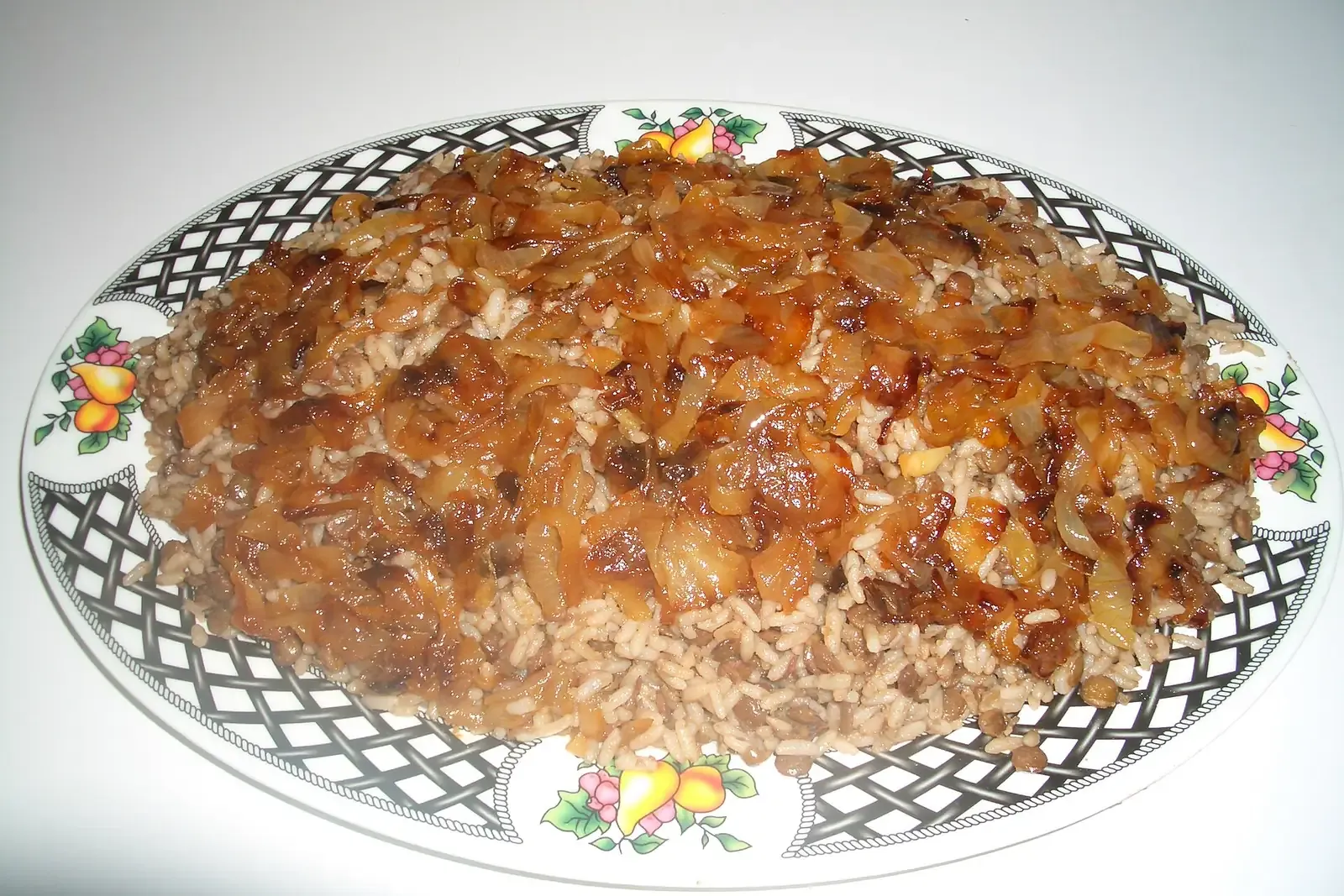
- Liquid & Texture Profile: Seco (dry). The mudardara form, with separate grains of rice and lentils under fried onions. The Lebanese puréed mjaddara is closer to a porridge (see §3).
- Traditional Cooking Vessel & Fuel: A heavy pot (tanjara) on the stove, with a frying pan for the onions.
02Historical & Cultural Context
Mujaddara is the region's most famous rice-and-lentil dish and the archetypal food of the poor and of fast days. It needs nothing but lentils, a grain, onions and oil. The first recorded recipe for mujaddara appears in the Kitab al-Tabikh, compiled by al-Baghdadi in Iraq in 1226. Several writers note that the older form was lentils with bulgur, the grain of the poor, before rice became common. The dish keeps a strong place in Christian Lenten eating and on Fridays, and it is commonly eaten with yoghurt, raw onion, radishes and a cabbage or tomato salad.
The naming is famously contested. In Lebanon, mjaddara usually refers to the puréed version, with a consistency like rice pudding. Mudardara is the version where rice and lentils stay whole and distinct, topped with fried onions. Taste of Beirut notes that mudardara uses roughly equal rice and lentils, while mjaddara uses far less rice. Other sources say Syria and Egypt use mudardara for the whole family. Syrian writers have joked about the "great war of mujaddara" over these names.
It is the Levantine cousin of the Vega Baja's Lenten arroz de los tres puñaos, with the same logic of legumes plus a cereal, cooked in staggered stages, meatless and filling.
Culinary science: brown or green lentils hold their shape after 15–20 min of simmering, which is when the rice goes in. Rice and lentils then finish together in the lentils' own cooking water. Onions fried to a deep brown supply both flavour (caramelisation) and fat. Part of the onion oil goes into the pot, and the crisp onions go on top. In the puréed mjaddara the lentils are cooked soft and passed through a mouli, and the rice thickens the purée.
03Local Town-by-Town Variations
- Lebanese mudardara: Whole grains, rice:lentils ≈ 1:1, lots of brown onion on top. Served warm or at room temperature.
- Lebanese puréed mjaddara: Lentils cooked very soft and puréed, with only 1/4–1/3 cup of rice per batch. It sets as it cools and is eaten cold with salad and raw onion.
- South Lebanon, mujaddara hamra or janoubiyeh ("red" or "southern"): Bulgur instead of rice. The colour comes from very dark onions. Some sources say the "red" refers to the onions rather than the grain, so the naming isn't settled.
- Palestine: Usually called mujaddara, made with rice (or freekeh/bulgur in villages), and eaten with yoghurt and salata. Common in Lent and among farming families.
- Syria: Mudardara is the usual name for the whole family. Often cumin-spiced, sometimes with bulgur.
- Jordan: Rice and lentils, onions on top, served with yoghurt.
| Variable | Mudardara | Puréed mjaddara | Janoubiyeh / hamra |
|---|---|---|---|
| Grain | Rice | A little rice | Coarse bulgur |
| Lentils | Whole | Puréed | Whole |
| Rice : lentils | ≈ 1 : 1 | ≈ 1 : 4 | Bulgur ≈ 1 : 1 |
| Served | Warm | Cold, set | Warm |
04The Master Recipe (4-Person Batch Blueprint)
Variant represented: Lebanese mudardara (whole grains, onion-crowned).
The Flavor Base (El Fondo)
| Ingredient | Quantity |
|---|---|
| Brown or green lentils, rinsed | 200 g |
| Water | 1.2 L |
| Onions, thinly sliced | 4 large (≈ 800 g) |
| Olive oil | 150 ml |
| Ground cumin | 1½ tsp |
| Salt | 2 tsp |
Assembly Ratios
| Element | Quantity |
|---|---|
| Medium- or long-grain rice, rinsed (or coarse bulgur for janoubiyeh) | 200 g |
| Lentil cooking water at rice-in | ≈ 500 ml (enough to stand 1 cm above the grains) |
| Lentils : rice | 1 : 1 by weight |
Step-by-Step Cooking Blueprint
- Onions: Fry the onions in the oil over medium heat until deep brown and crisp at the edges (25–30 min). Lift out half to drain for the topping.
- Lentils: Simmer the lentils in the water for 15–18 min, until tender but whole.
- Combine: Stir the rice, cumin, salt and the remaining onions with their oil into the pot. Adjust the water to about 1 cm above the surface.
- Fire Manipulation: Bring to a boil, cover and cook on the lowest heat for 18–20 min (bulgur: 15 min).
- Rest: Off the heat, covered, 10 min. Fluff.
- Serve: Top with the crisp onions. Serve with yoghurt or laban, raw onion wedges, radishes and a tomato-cucumber salad.
05Authority Reference Links
- Wikipedia – Mujaddara
- Taste of Beirut – Mujadara (mjaddara vs mudardara ratios)
- Syria Untold – Taking sides in the great war of mujaddara
- Little Sunny Kitchen – Mujadara with bulgur
- Milk Street – Beirut Fast Food (mujaddara with crisped onions; Kamal Mouzawak segment)
Foto: Bazel · CC BY-SA 3.0 · via Wikimedia Commons