⚠️ Source-confidence note: sayadieh is well documented as the fisherman's rice of the Levantine coast. The specific town schools below (Tripoli vs Saida vs Beirut, Yafa vs Gaza vs Akka) are drawn from cookbook and media descriptions of household practice and are only partly attested in published sources. Treat them as working hypotheses to check with coastal cooks.
01Geographic & Texture Profile
- Primary Geographic Zone: The Levantine coast: Lebanon's fishing towns (Tripoli/Trablous, Batroun, Jbeil, Beirut, Saida/Sidon, Tyre/Sour), the Palestinian coast (Yafa, Akka, Gaza), and the Syrian coast (Latakia, Tartus, Banias), and Jordan's Red Sea port of Aqaba.
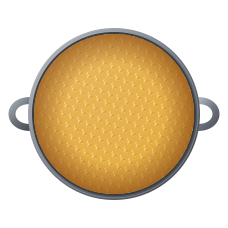
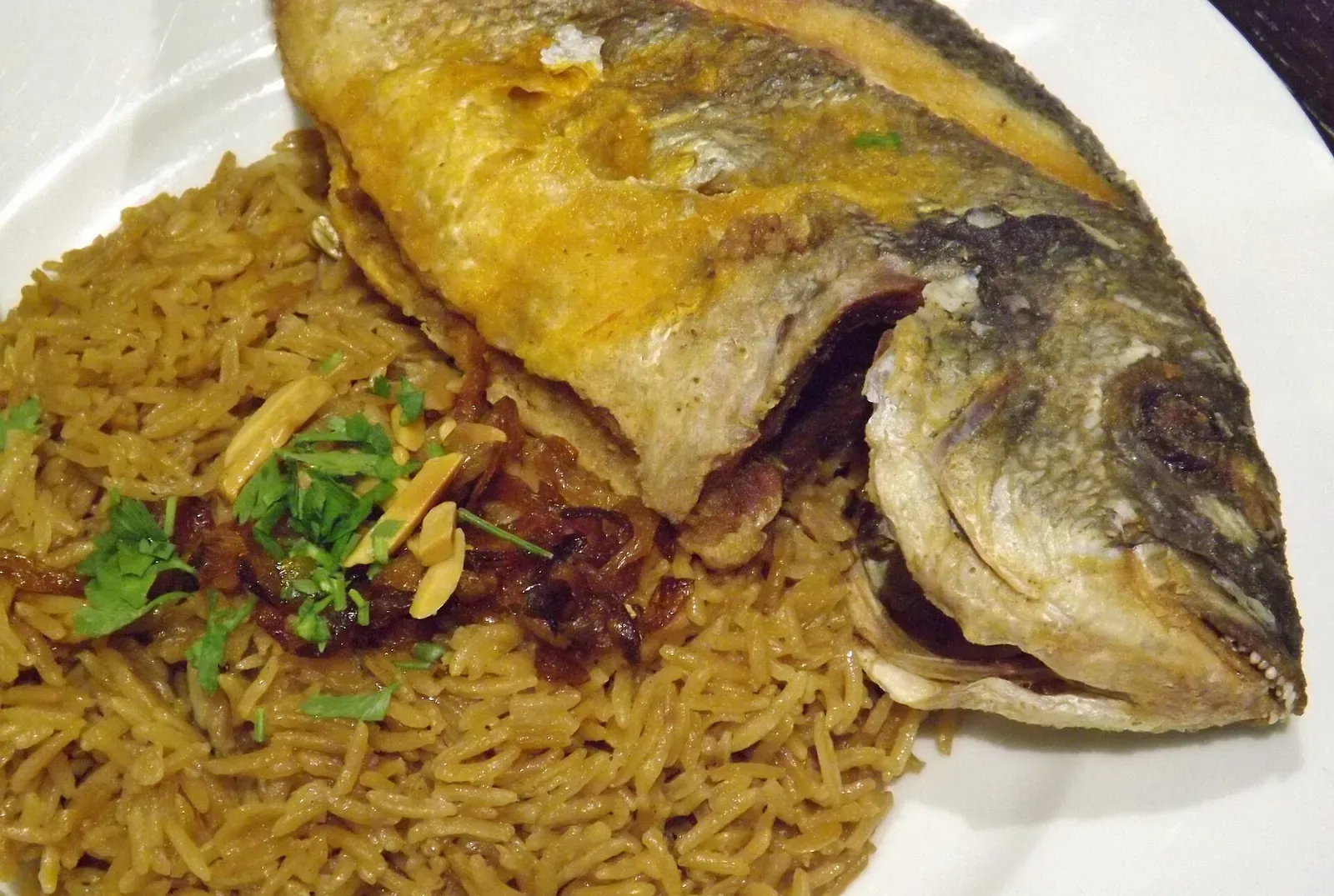
- Liquid & Texture Profile: Seco (dry). Fluffy, separate, deep-brown grains cooked in a fish-and-onion broth, served with fish on top.
- Traditional Cooking Vessel & Fuel: A heavy pot (tanjara or qidr) on the stove. The onions are fried in a wide pan (meqlaye), and the dish is served on a large round platter (sedr).
02Historical & Cultural Context
Ṣayyādiyya comes from ṣayyād, "fisherman". It is the dish fishermen made from the day's unsold catch: a firm white fish, its head and bones simmered into a stock, and rice cooked in that stock with a large quantity of onions fried until dark brown. Recipe writers across the region agree that the onions are the backbone of the dish. Their colour gives the rice its characteristic brown hue and bittersweet depth, and Arabic recipes warn that the onion must go deep brown without burning, because "the colour of the onion is the secret of the taste". It is served topped with the fish, more fried onion, toasted pine nuts or almonds and parsley, with tarator (tahini-lemon sauce) on the side.
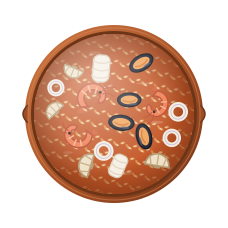
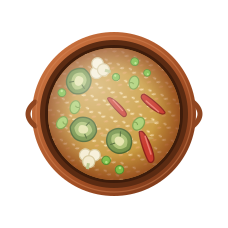
Structurally it is the Levantine cousin of the Alicante arroz a banda and the Santa Pola caldero. In all three, a fishermen's broth made from bony fish becomes the cooking liquid for rice, and the fish is either served on the side or laid on top. The Levantine signature is the onion caramel, where Spain uses tomato and ñora. Gaza has a strong fishing-family tradition of its own: The Gaza Kitchen records the Abu Hasira family recipe, a family whose name is synonymous with seafood in Gaza.
Culinary science: onions fried slowly to deep brown develop Maillard and caramelisation compounds and lose most of their water. Part of the fried onion is often blended into or simmered with the stock, which dissolves those pigments and sugars into the broth that the rice then absorbs evenly. Cumin and allspice dissolve in the fish fat. The rice is usually rinsed or soaked long-grain (or Egyptian medium-grain), cooked covered at a ratio of about 1:1.5–2 so the grains stay separate.
03Local Town-by-Town Variations
- Tripoli / North Lebanon (⚠️ household practice): Very dark onion. The broth is made from the whole fish, head included. Often served with tarator and fried bread. Cumin-forward.
- Saida & Sour (South Lebanon) (⚠️): Similar, but almonds rather than pine nuts on top. Some cooks fry the fish pieces first and cook the rice in the frying oil and onion.
- Beirut household version: Fillets (cod, haddock or loukoz/grouper) instead of a whole fish. The onion is blended into the stock. Garnish of toasted almonds and pine nuts. This is the version most published Lebanese recipes describe.
- Damascene-style "sayadieh shamieh": Arab women's media describe a version with loukoz (grouper), onions both minced (for the rice) and cut into wings (fried in the fish oil and laid on top).
- Gaza (Abu Hasira family): Firm white fish such as sea bass or grouper, marinated in lemon, flour and salt before frying, with onions sautéed for the rice. Gaza cooks often add more heat: green chile, garlic and dill appear in Gaza seafood cookery generally.
- Yafa / Akka (⚠️): Little is published specifically. Palestinian recipe collections give a "Palestinian sayadieh" with about 1 kg fish fillet, onions, rice and butter, but don't localise it further.
- Syrian coast (Latakia/Tartus): Syrian media list sayadieh among the seafood dishes of Ramadan on the coast. Some regional variants add tomato juice or pomegranate molasses to the broth.
- Aqaba (Jordan's Red Sea port): Sayadieh is Aqaba's signature dish. The fish is often hamour (grouper). The rice is browned with onions and cumin and served with da'oos, a hot chili-tomato sauce. (Jordan Travel – Sayadieh; Al Jazeera – Aqaba, city of nets and seas)
| Variable | Beirut household | Tripoli (⚠️) | Gaza (Abu Hasira) | Syrian coast |
|---|---|---|---|---|
| Fish | Fillets (cod, grouper) | Whole fish + head | Sea bass / grouper, lemon-flour marinade | Local white fish |
| Onion | Blended into stock | Very dark, on top | Sautéed for the rice | Minced + "wings" |
| Fat | Oil (± butter) | Oil | Oil | Oil / butter |
| Nuts | Almonds + pine nuts | Pine nuts | Varies | Pine nuts |
| Extra | — | Tarator, fried bread | Lemon, chile | ± tomato / pomegranate molasses |
04The Master Recipe (4-Person Batch Blueprint)
Variant represented: Lebanese coastal household (fish stock + onion caramel blended into the broth).
The Flavor Base (El Fondo)
| Ingredient | Quantity |
|---|---|
| Firm white fish (sea bass, grouper, cod), filleted, head + bones kept | 1 kg whole (≈ 600 g fillet) |
| Onions, halved and finely sliced | 4 large (≈ 800 g) |
| Neutral oil or olive oil | 150 ml |
| Ground cumin | 2 tsp |
| Allspice (bharat) | 1 tsp |
| Bay leaves | 2 |
| Cinnamon stick | 1 small |
| Water | 1.5 L |
| Salt | to taste |
Extraction:
- Onion caramel: Fry the onions in the oil over medium heat, stirring, until deep chestnut brown, not black (25–30 min). Lift out a third and drain it on paper for the garnish.
- Stock: Put the fish head, bones, bay, cinnamon and the remaining two-thirds of the onion (with its oil) into the water. Simmer 30 min, then strain. Blend the onion back into the stock for a darker, sweeter broth. You need ≈ 850 ml.
- Fish: Season the fillets with salt, cumin and allspice. Pan-fry or bake (200 °C, 12 min) until just cooked. Keep warm.
Assembly Ratios
| Element | Quantity |
|---|---|
| Long-grain rice (or Egyptian medium-grain), rinsed and soaked 20 min | 400 g |
| Brown onion stock | ≈ 800–850 ml (≈ 1 : 2 by volume) |
| Toasted pine nuts / almonds | 60 g |
| Tarator: tahini 120 g, lemon juice 80 ml, garlic 1 clove, water to loosen | — |
Step-by-Step Cooking Blueprint
- Toast: Drain the rice. Stir it in 2 tbsp of the onion oil with the cumin for 2 min.
- Liquid: Add the boiling stock and salt. Bring back to the boil.
- Fire Manipulation: Cover and cook on the lowest heat for 18 min. Don't lift the lid.
- Rest: Off the heat, keep it covered for 10 min, then fluff.
- Plate: Mound the rice on a platter, lay the fish on top, scatter over the reserved crisp onions, the nuts and parsley. Serve tarator and lemon on the side.
05Authority Reference Links
- Wikipedia – Sayadieh (mirror)
- Simply Lebanese – Sayadieh (Lebanese rice and fish)
- Mawdoo3 – طريقة عمل صيادية السمك اللبنانية (Lebanese sayadieh, AR)
- Mawdoo3 – طريقة عمل صيادية السمك الفلسطينية (Palestinian sayadieh, AR)
- Sayidaty – صيادية على الطريقة الشامية (Damascene-style sayadieh, AR)
- Sada El Balad – the colour of the onion is the secret (AR)
- ckbk / The Gaza Kitchen – Abu Hasira's Fish and Rice
- Eremnews – seafood dishes of Ramadan on the Syrian coast (AR)
- Feel Good Foodie – Sayadieh
صورة: young shanahan · CC BY 2.0 · عبر ويكيميديا كومنز