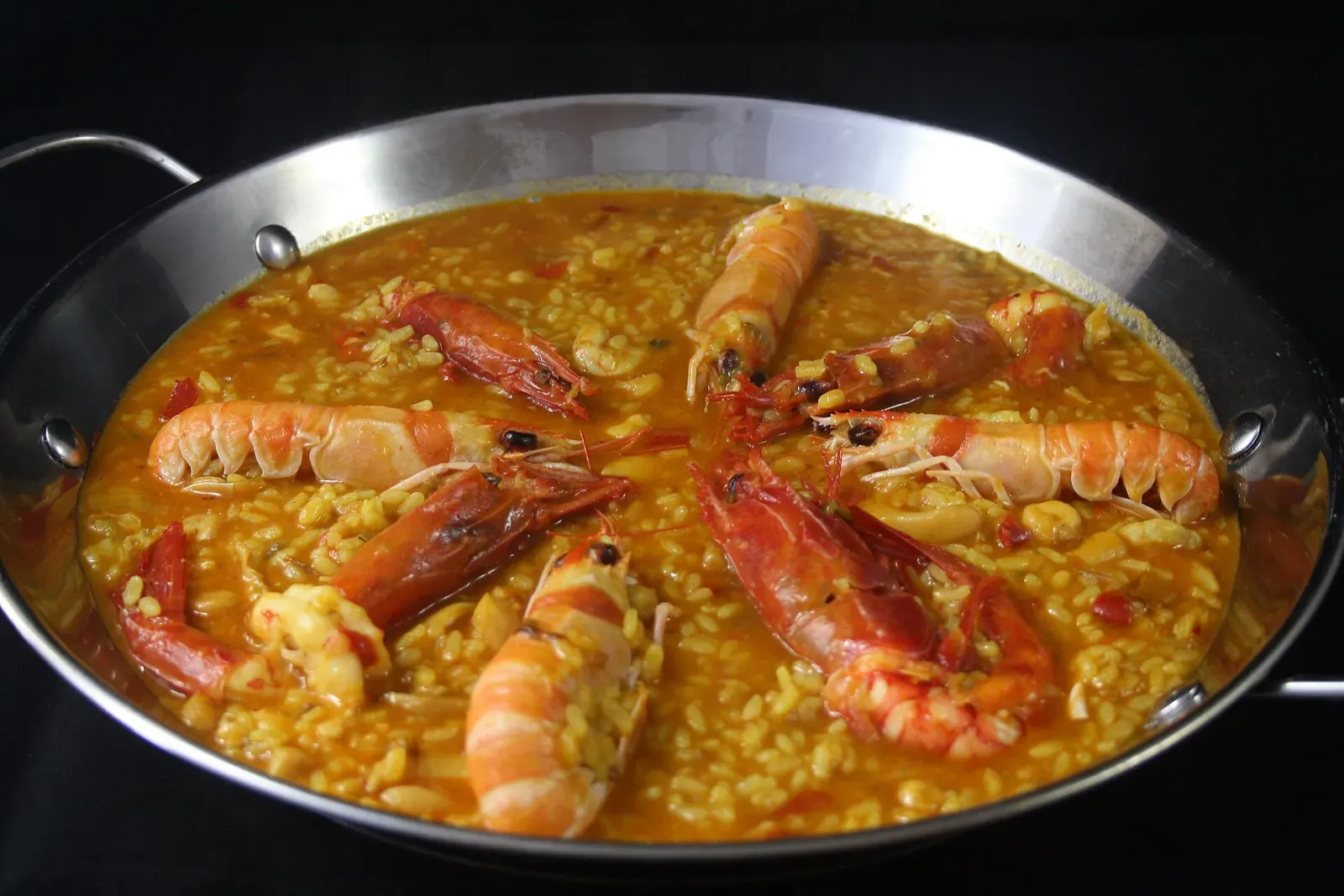
⚠️ Source-confidence note: Málaga's gastronomy guide documents a "soupy seafood rice" as the city's rice, but I found no canonical town-specific recipe. The town variations below are reconstructed from common coastal practice. Verify them locally.
01Geographic & Texture Profile
- Primary Geographic Zone: The Andalusian Mediterranean and Atlantic coast: Málaga (El Palo, Pedregalejo), the Costa del Sol, the Bahía de Cádiz and Sanlúcar.
- Liquid & Texture Profile: Caldoso (soupy).
- Traditional Cooking Vessel & Fuel: A deep perol, cazuela or caldero over gas, or over a fire on the beach.
02Historical & Cultural Context
In Andalucía, rice by the sea is mostly eaten soupy: a fishermen's pot of rice, fish and shellfish built on a broth. In Málaga this "arroz caldoso marinero" grew out of the jábega boats and the beach merenderos of El Palo and Pedregalejo, the same world as the espetos. The Málaga Gastronomy Guide describes it as the soupy version of Málaga rice, shaped by a seafaring city with a varied catch. Further west, in Cádiz and Sanlúcar, the same logic produces rices with galeras, chirlas (small clams), langostinos and cuttlefish, often with a dash of manzanilla or fino in the base.
Culinary science: with a broth ratio of about 5–6:1, the grains cook submerged, so they swell evenly without forming a crust. Released starch thickens the liquid only slightly. Shellfish such as clams and mussels open in the last minutes and contribute their briny liquor directly.
03Local Town-by-Town Variations (Crucial — reconstructed, verify locally)
- Málaga (El Palo / Pedregalejo): Rape (monkfish), almejas, mejillones, squid. Onion + green pepper + tomato sofrito. Often a little guindilla.
- Cádiz (Bahía): Chocos (cuttlefish), galeras, langostinos. A splash of fino. Plenty of parsley.
- Sanlúcar de Barrameda: Langostino de Sanlúcar + manzanilla in the base. Very loose broth.
- Costa del Sol interior villages: "Arroz campero"-style mixes of seafood and pork. Not strictly marinero.
04The Master Recipe (4-Person Batch Blueprint)
Variant represented: Málaga caldoso.
The Flavor Base (El Fondo)
| Ingredient | Quantity |
|---|---|
| Fish fumet (rockfish, heads) | 2 L |
| Olive oil | 70 ml |
| Onion, finely chopped | 1 (150 g) |
| Green pepper | 1 |
| Garlic | 3 cloves |
| Ripe tomato, grated | 200 g |
| Pimentón dulce | 3 g |
| Guindilla (optional) | 1 |
| Saffron | 0.2 g |
Extraction: Sweat the onion and pepper for 10 min. Add the garlic and pimentón (5 s), then the tomato (6 min).
Assembly Ratios
| Element | Quantity |
|---|---|
| Short/round rice | 320 g |
| Fumet | 1.8–2 L (≈ 6:1) |
| Monkfish, cubed | 300 g |
| Squid, rings | 200 g |
| Clams + mussels | 500 g |
| Peeled prawns | 12 |
Step-by-Step Cooking Blueprint
- Preparation: Purge the clams in salted water for 1 h. Scrub the mussels.
- Sear: Sear the squid in the pot for 3 min, then build the sofrito on top.
- Toasting: Add the rice and stir for 1 min.
- Liquid: Add the boiling fumet and saffron. Simmer 12 min.
- Seafood: Add the monkfish, clams and mussels and cook 4 min. Add the prawns for the last 2 min.
- Finish: Serve immediately, without resting, with chopped parsley.
05Authority Reference Links
- Málaga Gastronomy Guide – Soupy seafood rice (Arroz caldoso marinero)
- Directo al Paladar – Arroz marinero: seco, meloso o caldoso
- Directo al Paladar – Arroz marinero picante
- Michelin – Los mejores arroces de España más allá de la paella
صورة: Venta Aurelio · CC BY-SA 4.0 · عبر ويكيميديا كومنز