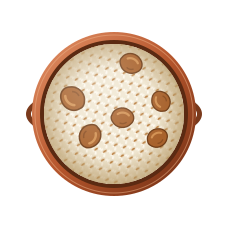
01Geographic & Texture Profile
- Primary Geographic Zone: al-Khalil / Hebron, its home and signature dish. A distinct version is made in Gaza.
- Liquid & Texture Profile: Seco (dry, separate grains). Buttery rice that has absorbed all the broth, under browned meat.
- Traditional Cooking Vessel & Fuel: The qidra itself, which gives the dish its name. In Hebron it is a copper or brass pot; in Gaza an unglazed clay urn. Either way it is carried to a neighbourhood wood-fired bakery oven, with each pot marked with its family's name.
02Historical & Cultural Context
Qidra simply means "pot", sometimes specifically a clay vessel, and the dish is named after it. It is Hebron's festive rice: lamb (or chicken) and rice cooked together in a sealed pot in the baker's oven for hours, then finished with local ghee (samneh baladi). It appears at weddings, 'aqiqa birth celebrations, Fridays, Ramadan and both Eids, and Palestinian Christians make it at Christmas. It is usually ordered from a bakery rather than made at home. A 2015 Al Jazeera report describes qidra gradually displacing mansaf at Hebron feasts. It records one family's origin account: the Jordanian army brought meat and rice during Ramadan to the bakery of the late Hajj Ata Fnoun al-Tamimi and asked him to cook them together in his oven. His grandson Jalal says the baker went on to refine the dish with spices and safflower ('usfur) for colour. Other sources credit other Hebron families or trace it to the Ottoman period. ⚠️ The origin is disputed.
Culinary science: the oven surrounds the sealed pot with steady dry heat. Rice cooks gently in measured, defatted broth while the meat browns on top, much like the Valencian arroz al horno, which was also cooked in the village baker's oven in marked pots. Ghee brushed on at the end gives gloss and a nutty, lactic aroma. Safflower or turmeric colours the rice yellow without adding much flavour.
03Local Town-by-Town Variations
- The Hebron (al-Khalil) Style: Plain, with few spices. The aim is the flavour of meat, rice and ghee. Lamb or beef, or chicken. Rice pre-cooked in spiced, safflower-coloured water, then layered with the browned meat and its defatted broth in a copper pot. Wood-fired oven. At least 3 hours in all. Some Hebron cooks first brown whole garlic cloves in samneh in the pot. Served with yogurt and cucumber.
- The Gaza Style: Cooked in an unglazed clay urn, which is cracked open at the table so the rice spills out. It adds chickpeas, onions, whole garlic cloves and more spices, typically turmeric, cumin, cardamom, allspice and cinnamon (⚠️ the exact mix varies by family). It is documented in The Gaza Kitchen (El-Haddad & Schmitt) as a dish for weddings, births and funerals.
- Home versions everywhere: A Dutch oven at about 180 °C replaces both the copper pot and the bakery oven. Freekeh sometimes replaces part of the rice.
| Variable | Hebron | Gaza |
|---|---|---|
| Pot | Copper / brass | Unglazed clay urn |
| Spicing | Minimal; safflower for colour | Turmeric, cumin, cardamom, allspice… |
| Additions | (Garlic in samneh) | Chickpeas, onions, whole garlic |
| Serving | Turned into a tray | Urn cracked open at the table |
04The Master Recipe (4-Person Batch Blueprint)
Variant represented: home oven version of the Hebron qidra, with the optional Gaza chickpeas and garlic.
The Flavor Base (El Fondo) (the broth / maraq)
| Ingredient | Quantity |
|---|---|
| Lamb shoulder or neck, on the bone, large pieces | 1.2 kg |
| Water | 1.8 L |
| Onion, halved; bay leaf; cardamom pods; cinnamon stick | 1 / 2 / 4 / 1 |
| Samneh (ghee) | 40 g |
| Garlic, whole peeled cloves | 1 head |
| Spice for the meat: allspice, black pepper, cinnamon | 1 tsp each |
| Salt | to taste |
| [Gaza] Chickpeas, soaked overnight and part-cooked | 200 g |
Simmer the lamb with the onion and whole spices for 75–90 min, skimming, until nearly tender. Strain and skim off the fat. Keep ≈ 900 ml of broth.
Assembly Ratios
| Element | Quantity |
|---|---|
| Rice (Egyptian medium grain or basmati), washed, soaked 30 min | 400 g |
| Defatted broth | ≈ 800–850 ml (≈ 2 : 1 by volume) |
| Safflower ('usfur) or turmeric | 1 tsp / ½ tsp |
| Samneh to finish | 30 g |
| Oven | 180 °C |
| Garnish: fried almonds or pine nuts, parsley; serve with yogurt and cucumber | — |
Step-by-Step Cooking Blueprint
- Meat: Rub the poached lamb with the allspice, pepper and cinnamon. Brown it in the oven at 200 °C (20 min) or in the pot.
- Garlic base: In a heavy oven-safe pot, melt 40 g of samneh and fry the whole garlic cloves until golden (3 min). [Gaza: add the chickpeas and a sliced onion.]
- Rice: Stir in the drained rice and the safflower or turmeric and coat it in the fat (2 min). Lay the meat on top.
- Liquid Addition: Pour on the hot broth (≈ 2 : 1) and correct the salt. Seal with a lid, plus foil if the lid is loose.
- Oven: Bake at 180 °C for 60–75 min until the rice has absorbed all the broth and the meat is browned. (The bakery version goes in and out of the wood oven over 3 hours.)
- Finish/Resting Phase: Brush the meat and rice with the remaining samneh. Rest 10 min covered. Turn out onto a tray or serve from the pot. Scatter nuts on top and serve with yogurt.
05Authority Reference Links
- Al Jazeera – «القدرة» تنافس «المنسف» على موائد الخليل (Hebron bakery qidra, origin account)
- Al Raya – القدرة: أكلة خليلية لا تُطبخ في المنزل
- Wikipedia – Qidreh
- Travel Palestine (Ministry of Tourism) – Qidreh
- Ckbk / The Gaza Kitchen (El-Haddad & Schmitt) – Spiced rice with lamb, chickpeas and garlic (Gaza qidra)
- Mawdoo3 – كيفية عمل القدرة الخليلية
- Tasting Table – Qidreh: the Palestinian rice dish you need to try
- Urban Farm and Kitchen – Qidreh, Palestinian spiced lamb and rice