⚠️ Source-confidence note: the two main forms (bi zeit and bi lahmeh) are well documented. The Lenten association is attested in Eastern-Church fasting guides (Armenian), not directly in a Lebanese source found here. Town-level variants are not documented.
01Geographic & Texture Profile
- Primary Geographic Zone: The vine-growing mountains and plains of Lebanon (Mount Lebanon, the Bekaa, Zahle), Syria (Damascus, Aleppo) and Palestine.
- Liquid & Texture Profile: Meloso (creamy). The rice is cooked inside the leaves in a lemony broth until tender and juicy, and the rolls stay moist.
- Traditional Cooking Vessel & Fuel: A deep, heavy pot (tanjara) with an inverted plate weighing down the packed rolls, on the stove.
02Historical & Cultural Context
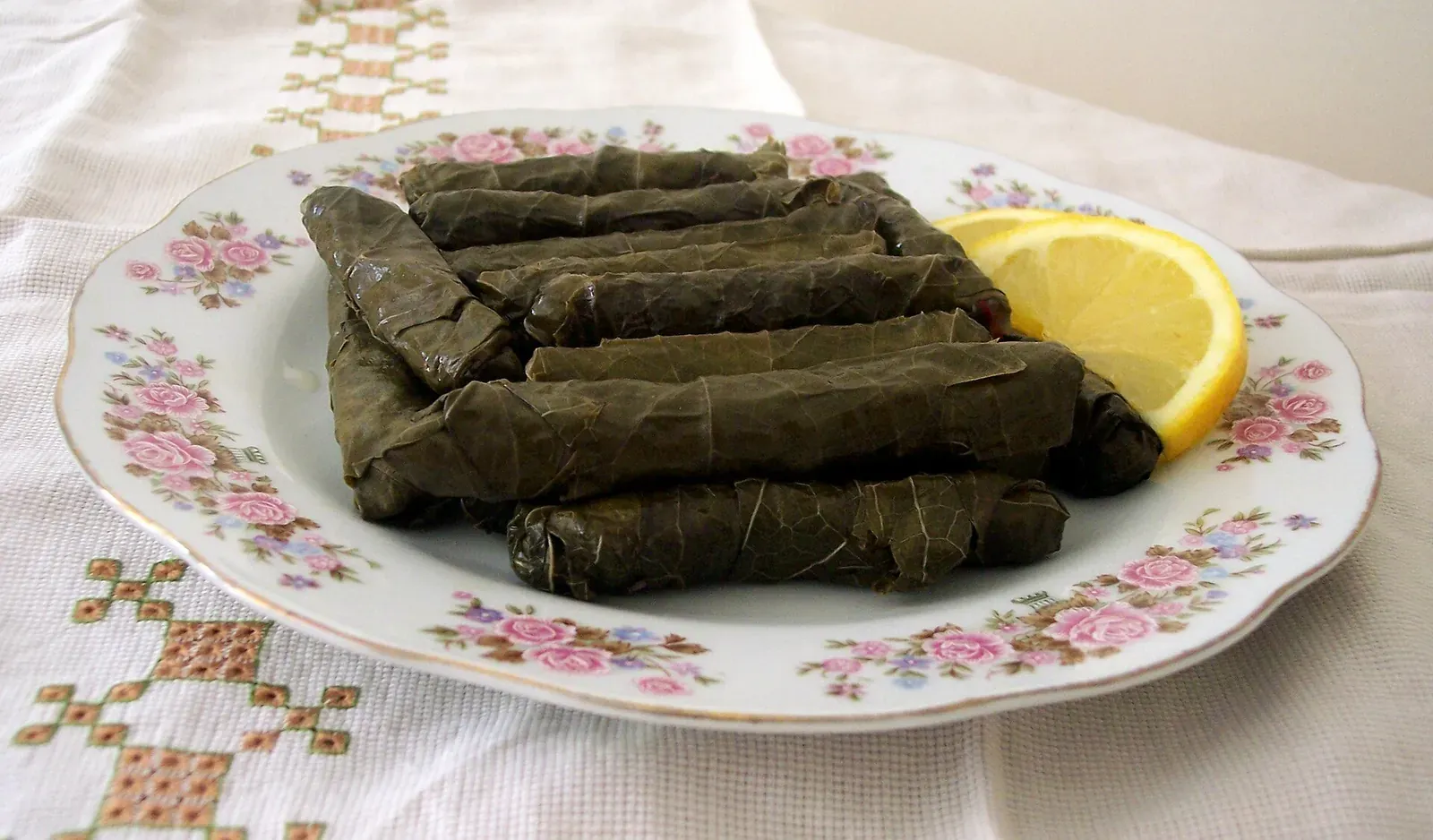
Rolling vine leaves around rice is a shared craft of the eastern Mediterranean, done when the leaves are young and tender in late spring and preserved in brine for the rest of the year. Lebanese and Syrian kitchens distinguish two families:
- Warak enab bi lahmeh (with meat): leaves stuffed with raw rice mixed with raw minced lamb or beef and spices. The rolls are packed over lamb chops (or bones) lining the bottom of the pot and cooked in water with lemon (and in Damascus, dried mint). The chops are served alongside.
- Warak enab bi zeit (with oil), also called yalanji: a vegetarian stuffing of rice, tomato, onion, parsley and mint in lemony olive oil, often layered with potato and tomato slices, served at room temperature with yoghurt and lemon. The name yalanji derives from the Turkish for "false" or "liar", because it contains no meat. As a meatless dish it suits the strict Eastern-Church fasts, which exclude meat, fish, poultry, dairy and eggs.
Culinary science: the raw rice expands inside the leaf as it absorbs the broth, so the rolls must be firm but not tight. A plate pressed on top stops them unrolling as the rice swells. Lemon and a long, gentle simmer soften the leaves' fibres and balance their tannic, sour flavour. In the meat version, fat and gelatin from the chops underneath enrich the broth that the rice absorbs.
03Local Town-by-Town Variations
- Damascene style (bi lahmeh): Uncooked rice mixed with raw minced lamb, garlic and spices. Lamb chops at the bottom of the pot, rolls on top, a heavy plate on top of that. Cooked in water, lemon juice and dried mint. Indicative quantities: 1 kg leaves, 500 g Egyptian rice, 500 g minced lamb, 10 lamb chops, 3 L water.
- Lebanese bi lahmeh: Ground lamb, medium-grain rice and Lebanese baharat over small lamb chops. A beef variant lines the pot with potato slices instead.
- Lebanese bi zeit / yalanji: Rice, tomato, onion, parsley and mint in olive oil and lemon. Rolls layered with potato, onion and tomato slices. Served cold or at room temperature with yoghurt and lemon.
- Palestinian: Often cooked together with stuffed courgettes (kousa) in the same pot. See the Palestinian mahshi file when available.
- Town-level variants: ⚠️ Not documented. Mountain villages vs the coast and Bekaa vs Mount Lebanon are questions for local cooks.
04The Master Recipe (4-Person Batch Blueprint)
*Variant represented: Lebanese warak enab bi zeit (yalanji), with the meat version's changes in brackets.*
The Flavor Base (El Fondo)
| Ingredient | Quantity |
|---|---|
| Vine leaves, brined (rinsed) or fresh (blanched 1 min) | ≈ 60 leaves |
| Short- or medium-grain rice, rinsed, drained | 250 g |
| Tomatoes, finely diced | 2 (≈ 250 g) |
| Onion, finely chopped | 1 |
| Flat parsley + fresh mint, finely chopped | 1 bunch + ½ bunch |
| Olive oil | 120 ml |
| Lemon juice | 120 ml (≈ 3 lemons) |
| Salt, 7-spice, dried mint | 2 tsp / 1 tsp / 1 tsp |
| Potato + tomato slices (to line the pot) | 2 potatoes + 1 tomato |
| [Bi lahmeh: minced lamb 300 g mixed into the raw rice; 6–8 small lamb chops, browned, lining the pot; omit most of the oil] | — |
Assembly Ratios
| Element | Quantity |
|---|---|
| Filling per leaf | ≈ 1 level tsp (≈ 8–10 g) |
| Cooking liquid | Water + lemon + oil to cover the rolls by 1 cm (≈ 700 ml) |
| Rice : leaves | ≈ 4 g raw rice per leaf |
Step-by-Step Cooking Blueprint
- Filling: Mix the raw rice, tomato, onion, herbs, half the oil, half the lemon juice and the seasoning.
- Rolling: Lay a leaf vein-side up, put the filling near the stem, fold in the sides and roll into a firm cigar, not tight (the rice swells).
- Packing: Line the pot with the potato and tomato slices [or the lamb chops]. Pack the rolls seam-down in tight concentric layers.
- Liquid: Pour over the rest of the oil and lemon and enough water to cover by 1 cm. Weigh the rolls down with an inverted plate.
- Fire Manipulation: Bring to a gentle boil, then cover and simmer on low heat for 50–60 min, until the rice is tender and most of the liquid is absorbed.
- Rest: Cool in the pot. Bi zeit is served at room temperature [bi lahmeh hot, inverted onto a platter with the chops], with yoghurt and lemon wedges.
05Authority Reference Links
- Cardamom and Tea – Lebanese warak enab (with lamb chops)
- Marhaba Qatar – Ahmad Aldegn's Damascene warak enab with lamb chops
- An Edible Mosaic – warak enab bi zeit / yalanji (vegetarian)
- Plant Based Folk – Warak enab (Lebanese grape leaves)
- The Armenian Kitchen – Lenten recipe guide (stuffed grape leaves for strict fasts)
Foto: Noumenon · CC BY-SA 3.0 · vía Wikimedia Commons