01Geographic & Texture Profile
- Primary Geographic Zone: La Costera (Xàtiva), La Vall d'Albaida (Ontinyent), L'Horta Sud (Torrent), and La Safor. It is made across almost the whole territory, and in Alicante and Castellón as well.
- Liquid & Texture Profile: Seco (dry). The grains are loose and fully absorbed, with a slightly crisp top and edges.
- Traditional Cooking Vessel & Fuel: A shallow, wide glazed earthenware cassola de fang. It was traditionally carried to the village baker's wood-fired oven (forn de llenya), because most homes had no oven of their own.
02Historical & Cultural Context
Arròs al forn is the rice of the olla. It was invented to use the broth, chickpeas and meat left over from Saturday's cocido (olla or putxero). On Monday the household fried leftover pork, sausage and potato in the cassola, added rice, chickpeas and the cocido broth, and sent it to the bakery. The baker cooked dozens of cassoles at once, timing them by position in the oven. Each family marked its pot with a scratched initial or a coloured string. This is why the dish has as many versions as households, and why Valencian cookbooks call it "the most democratic rice".
In Xàtiva the tradition is ritualised as "arròs al forn en tanda": on the Thursdays before Carnestoltes (Carnival), families queue their cassoles at the bakers' ovens in strict order (tanda). The Xàtiva version uses panceta (belly) instead of the pig's snout and ear found elsewhere.
Culinary science: oven heat surrounds the pot instead of coming only from below, so no socarrat forms at the base. Instead the heat creates a gentle evaporation crust on top. The whole head of garlic in the centre steam-roasts and softens. The potato slices on the surface act as a lid that protects the rice from drying out. Because the clay holds heat for a long time, cooking continues after the pot leaves the oven, so arròs al forn is undercooked by about two minutes on purpose and finished on the rest.
03Local Town-by-Town Variations
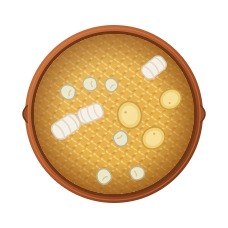
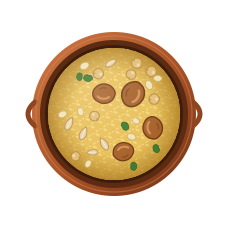
- The Xàtiva Style (La Costera): Belly (cansalada) instead of snout and ear. Pilotes (meatballs from the olla: minced pork, breadcrumbs, pine nuts, parsley, egg) are common. Chickpeas are always included. Broth comes from the cocido. The Carnestoltes en tanda ritual belongs here.
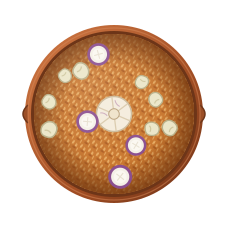
- The Ontinyent / Vall d'Albaida Style: Heavier on botifarra de ceba (onion blood-sausage) and blanquet (white sausage with pine nuts). Some families stud the surface with raisins (panses), and the result is then called arròs passejat or arròs amb panses.
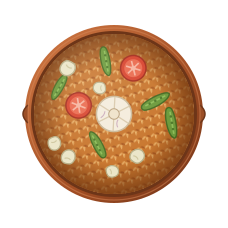
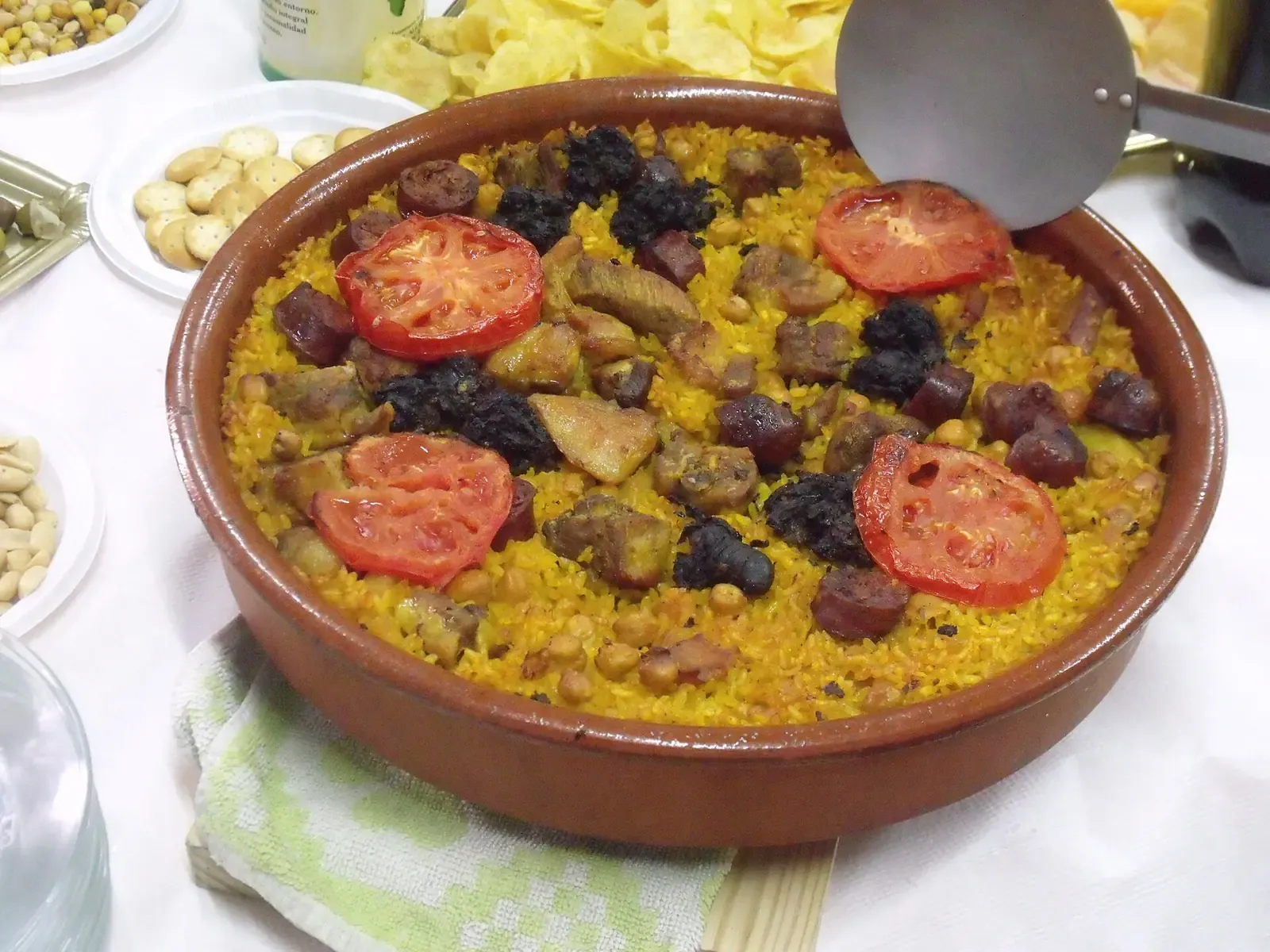
- The Torrent / Horta Sud Style: Pork ribs (costella) and morcilla dominate. Tomato is halved and laid face-up on top rather than grated. Some cooks add the snout and ear (morro i orella).
- The Alicante-province echo (Alcoi / Comtat): Arròs al forn amb pilotes sometimes gets an egg finish. That technique is the bridge to Arroz con costra, which is essentially an arròs al forn sealed with egg.
| Element | Xàtiva | Ontinyent | Torrent |
|---|---|---|---|
| Pork cut | Belly | Ribs + belly | Ribs, snout/ear |
| Sausages | Morcilla | Botifarra de ceba + blanquet | Morcilla |
| Pilotes | Common | Occasional | Rare |
| Raisins | No | Optional | No |
| Tomato | Grated + halves | Halves | Halves on top |
04The Master Recipe (4-Person Batch Blueprint)
Variant represented: Xàtiva-style (belly, chickpeas, morcilla, optional pilotes), based on the Generalitat Valenciana's tourism recipe card.
Vessel: A 32–34 cm cassola de fang. Season it in water before first use.
The Flavor Base (El Fondo)
The broth should be olla broth (left over from cocido). If you don't have any, make it:
| Broth ingredient | Quantity |
|---|---|
| Water | 2 L |
| Beef shin / jarrete | 300 g |
| Chicken carcass or thigh | 300 g |
| Pork bone (espinazo) | 200 g |
| Dried chickpeas, soaked 12 h | 200 g |
| Potato, carrot, celery, turnip | 1 each |
| Saffron | 0.2 g |
Simmer for 2.5 h, skimming, then strain. Keep the chickpeas. You need 800 ml of broth at the end.
Sofrito in the cassola:
| Ingredient | Quantity |
|---|---|
| Olive oil | 80 ml |
| Pork belly, 2 cm slices | 250 g |
| Pork ribs, cut short | 250 g |
| Morcilla de cebolla (blood sausage) | 2 pieces (≈200 g) |
| Potato, 0.5 cm rounds | 1 medium (200 g) |
| Ripe tomatoes | 2 (one grated, one halved) |
| Whole head of garlic | 1 |
| Pimentón dulce | 3 g |
| Pilotes (optional, Xàtiva) | 4 × 60 g |
Assembly Ratios
| Element | Quantity |
|---|---|
| Short-grain rice | 400 g |
| Broth (very hot) | 800 ml (exactly 2:1 by volume to the rice) |
| Cooked chickpeas | 250 g |
| Oven | 220–250 °C, conventional heat, top and bottom |
Step-by-Step Cooking Blueprint
- Preparation: Preheat the oven to 240 °C for at least 20 min. Heat the broth to boiling.
- Frying: Heat the oil in the cassola on a hob over a heat diffuser. Fry the potato rounds until golden and set them aside. Fry the halved tomato (cut-side down) and the whole garlic head, then set them aside. Brown the ribs and belly (≈8 min). Briefly fry the morcilla, 1 min only, so it doesn't burst. Set it aside.
- Toasting: Add the grated tomato and cook it for 3 min. Add the pimentón for 5 s, then the rice. Stir and toast for 2 min so that every grain is coated in fat.
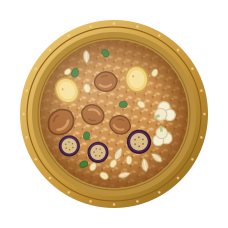
- Assembly: Add the chickpeas and spread everything in an even layer. Put the garlic head in the centre and arrange the tomato halves, morcilla, pilotes and potato rounds on the surface like a mosaic.
- Liquid Addition: Pour in the boiling broth with the saffron. It should just cover the rice. Taste for salt.
- Fire Manipulation (Oven): Move the cassola straight into the oven. Bake 18–20 min at 240 °C until the surface is dry and the potatoes are golden. Don't open the oven during the first 12 minutes.
- Finish/Resting Phase: Rest 5 min out of the oven. The clay keeps cooking the rice. Serve straight from the cassola.
05Authority Reference Links
- Comunitat Valenciana Turisme – Arròs al forn (official recipe, VA)
- Comunitat Valenciana – Arròs al forn recipe card PDF (VA)
- Mediterráneo en Acción – Arroz al horno
- Valencia Bonita – Arròs al forn en tanda (Xàtiva Carnestoltes tradition)
- Valencia Bonita – De la taula a la boca: recepta d'arròs al forn
- Xàtiva Turismo – Tastes of Xàtiva
- Ajuntament de Xeraco – Llibret de receptes (PDF, local recipe collection)
صورة: 19Tarrestnom65 · CC BY-SA 4.0 · عبر ويكيميديا كومنز