01Geographic & Texture Profile
- Primary Geographic Zone: El Baix Vinalopó (Elx/Elche, Crevillent) and La Vega Baja del Segura (Orihuela, Callosa de Segura). Versions also exist in Pego (Marina Alta) and Torrevieja.
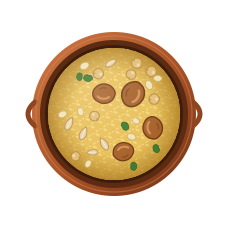
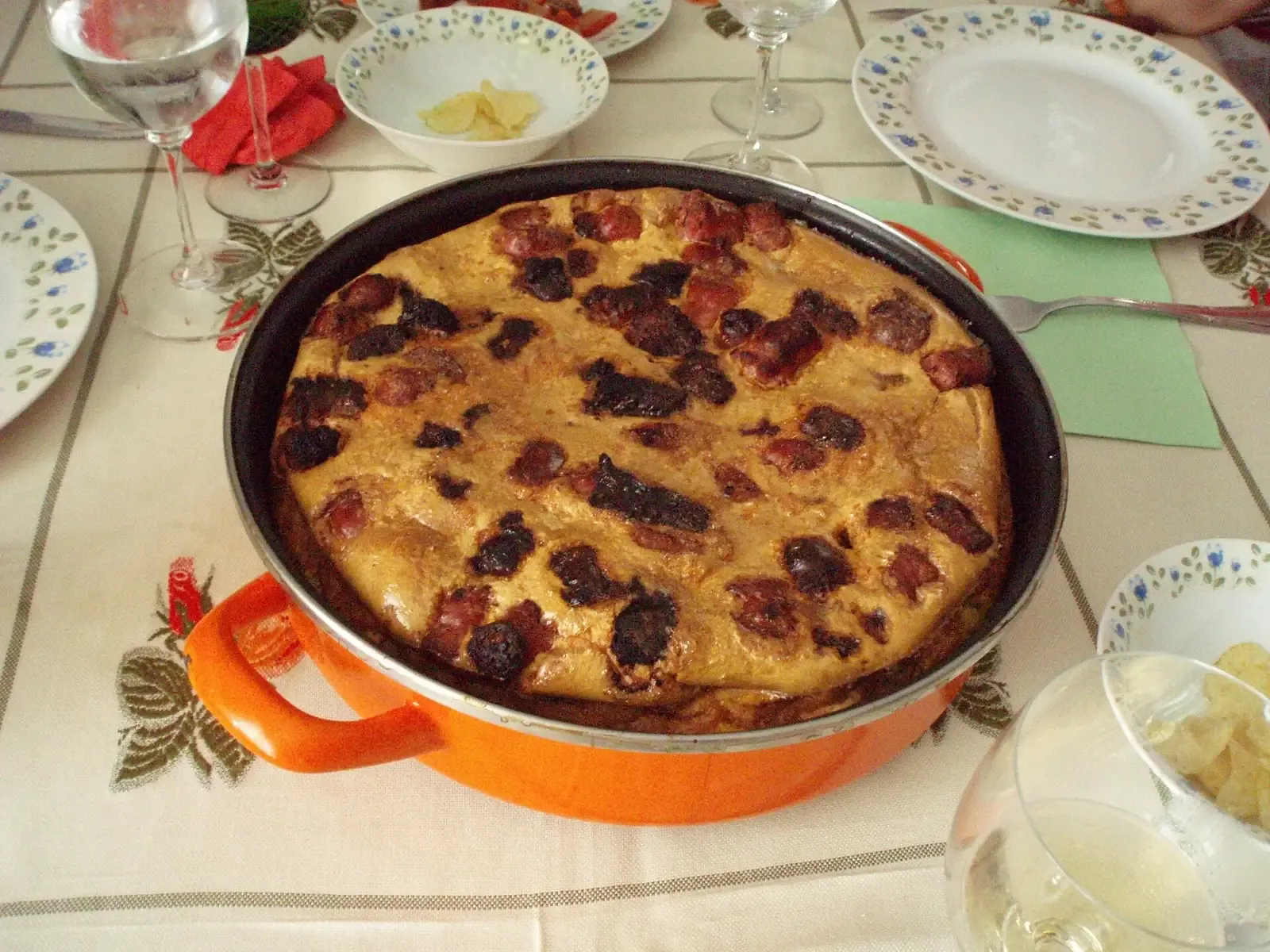
- Liquid & Texture Profile: Seco (dry). Underneath is a dry baked rice, sealed by a souffléd egg crust (costra).
- Traditional Cooking Vessel & Fuel: A deep earthenware perol de barro (or cassola). The rice is cooked on a wood fire and the crust is set in the baker's oven or under a metal lid heaped with embers (a dos fuegos).
02Historical & Cultural Context
Arroz con costra is one of the oldest documented rices in Spain. Elche and Orihuela both claim it. The Oriolan tradition places an early recipe in the Convento de la Santísima Trinidad de Orihuela. It is often said to be medieval and is linked to the Christian period after the Reconquista: a dish rich in pork and eggs worked as a public "proof" of being an old Christian rather than a morisco or converso. Local press has called it "un detector de moriscos". Another account has workers from Callosa de Segura bringing the dish to Elche's palm groves. In 2019 Elche cooked the world's largest arroz con costra. In 2024–25 the city started the process to have it declared a Bien de Interés Cultural Inmaterial.
The dish is a direct cousin of arròs al forn: the same meat-and-chickpea logic, plus beaten egg poured over the top just before the end. Culinary science: in the oven, the egg proteins coagulate around 70–80 °C. Fat rendered from the sausages and steam rising from the rice puff the egg into a light, golden, almost soufflé-like layer that traps moisture underneath. A hot perol with a hot ember lid gives the same top-down heat as an oven.
03Local Town-by-Town Variations
- The Elche (Elx) Style: Always finished in the oven (or under an ember-laden lid). Includes rabbit (and often chicken) in addition to pork sausages. Characteristic pelotas: large meatballs of pork, breadcrumbs, pine nuts, lemon zest and parsley, bound with egg. They are poached in the broth and then nested into the rice. The crust is thick and souffléd, made with about 8–10 eggs per perol.
- The Orihuela "Arroz y Costra" Style: Note the name, "y", not "con". The traditional Oriolan version does not use an oven. The perol is covered with a lid and embers are placed on top, or the dish is finished slowly on the hob, so the crust is denser and closer to a tortilla. It relies on the local embutido oriolano: longaniza blanca (white, with spices and pine nuts) and longaniza roja (red, with pimentón), plus morcilla (blood sausage). Rabbit is optional, and many Oriolan cooks use only sausage or sausage + chicken.
- The Callosa de Segura / Vega Baja Style: Cooks often brown the meats and sausages hard first, which local cooks single out as "dorar bien los ingredientes", and use a light caldo of chicken and pork bones rather than plain water. Chickpeas are common.
- The Crevillent Style: Very close to Elche. Some families add a small amount of magro (pork shoulder) cubes and finish with fewer eggs.
- The Pego (Marina Alta) Style — "la Crosta": Pego and Elche both claim the dish, and the two towns have twinned their costra associations. Pego uses pork chops, dried botifarres and chicken ("costelletes de porc, botifarres seques i pollastre trossejat"), where Elche uses rabbit, botifarra blanca and blanquet. Both use Bomba rice; in Pego it is sometimes the locally recovered Bombó variety from the Pego-Oliva marjal. Both pour the beaten egg on when the rice is almost dry and finish it in the oven. The town hall's recipe adds chickpeas. Pego has a local holiday, the Dia de la Crosta (sources disagree on the date: Shrove Tuesday or 25 February ⚠️). (Alicante Plaza – Arròs amb costra: Pego versus Elx, Ajuntament de Pego – Gastronomia)
| Variable | Elche | Orihuela | Callosa / Vega Baja |
|---|---|---|---|
| Name | Arròs amb crosta | Arroz y costra | Arroz con/y costra |
| Rabbit | Yes | Optional | Optional |
| Pelotas | Yes, characteristic | Rare | Occasional |
| Embutido | Mixed fresh sausages | Longaniza blanca + roja + morcilla | Longaniza + morcilla |
| Crust heat | Oven | Ember lid / hob | Oven or ember lid |
| Eggs (perol for 4–6) | 8–10 | 6–8 | 6–8 |
04The Master Recipe (4-Person Batch Blueprint)
Variant represented: Elche style (oven-finished, rabbit + embutido + optional pelotas). The Orihuela modifications are given in brackets.
Vessel: A 30–32 cm, 10 cm deep, oven-safe earthenware perol.
The Flavor Base (El Fondo)
| Ingredient | Quantity |
|---|---|
| Olive oil | 70 ml |
| Rabbit, in small pieces | ½ (≈ 500 g) [Orihuela: omit or replace with 400 g chicken] |
| Chicken thighs (optional) | 300 g |
| Fresh mixed embutido (longaniza blanca, longaniza roja, morcilla) | 400 g, in 3 cm pieces |
| Ripe tomato, grated | 150 g |
| Garlic | 2 cloves, minced |
| Water or light pork-chicken caldo | 1.2 L |
| Cooked chickpeas (optional) | 150 g |
| Saffron | 0.2 g |
| Pelotas (optional, Elche): pork mince 200 g, breadcrumb 60 g, pine nuts 20 g, 1 egg, parsley, lemon zest | 4–6 balls |
Extraction: Brown the rabbit and chicken in the oil for 10–12 min. Add the sausages and brown them for 3 min. Remove the morcilla (it bursts if boiled long) and set it aside. Add the garlic, then the tomato, and cook until jammy (5 min). Add the liquid, chickpeas and saffron, plus the raw pelotas if you are using them. Simmer for 25 min. Remove the pelotas, which will go back on top later.
Assembly Ratios
| Element | Quantity |
|---|---|
| Short-grain rice | 400 g |
| Broth in the perol when the rice goes in | ≈ 1.0 L (≈ 2.5:1 by volume) |
| Eggs (crust) | 6 large (Elche: 8; Orihuela: 6) |
| Salt for the eggs | 1 pinch |
| Oven | 220 °C, top heat / grill element |
Step-by-Step Cooking Blueprint
- Preparation: Preheat the oven to 220 °C with the top element on. Beat the eggs with a pinch of salt and keep them at room temperature.
- Toasting: Bring the broth to a full boil and correct the salt. Add the rice and distribute it evenly.
- Liquid & Fire Manipulation: Cook on the hob at a strong boil for 8 min, then on medium for 6 min. Return the morcilla and pelotas to the surface.
- The Crust: When the rice is almost dry but still slightly wet (about minute 14), pour the beaten egg over the whole surface in an even layer.
- Oven: Move the perol to the oven for 8–10 min until the crust is puffed, set and golden. [Orihuela: cover with a metal lid heaped with embers, or keep on very low heat covered, for 10–12 min.]
- Finish/Resting Phase: Rest 5 min. The crust will settle slightly. Serve at the table from the perol, cutting wedges like a cake so each portion has crust, rice and meat.
05Authority Reference Links
- Comunitat Valenciana Turisme – Arroz con costra (official recipe)
- Comunitat Valenciana – Arròs amb crosta recipe card (VA, PDF)
- El Español Alicante – Los expertos coinciden: perol de barro, conejo y embutido
- El Español – Los secretos del arroz con costra: el primero registrado y el "detector de moriscos"
- El Español – Rosario, cocinera de la Vega Baja: la clave es el caldo y dorar los ingredientes
- Valencia Bonita – Arroz con costra (Elche vs Orihuela "arroz y costra")
- AQUÍ Medios – Los orígenes medievales del arroz y costra
- Alicante Plaza – Elche pedirá declarar el arroz con costra Bien de Interés Cultural Inmaterial
- Directo al Paladar – Cómo hacer arroz con costra o arròs amb crosta
صورة: Juan J. Martínez from Valencia, España · CC BY-SA 2.0 · عبر ويكيميديا كومنز