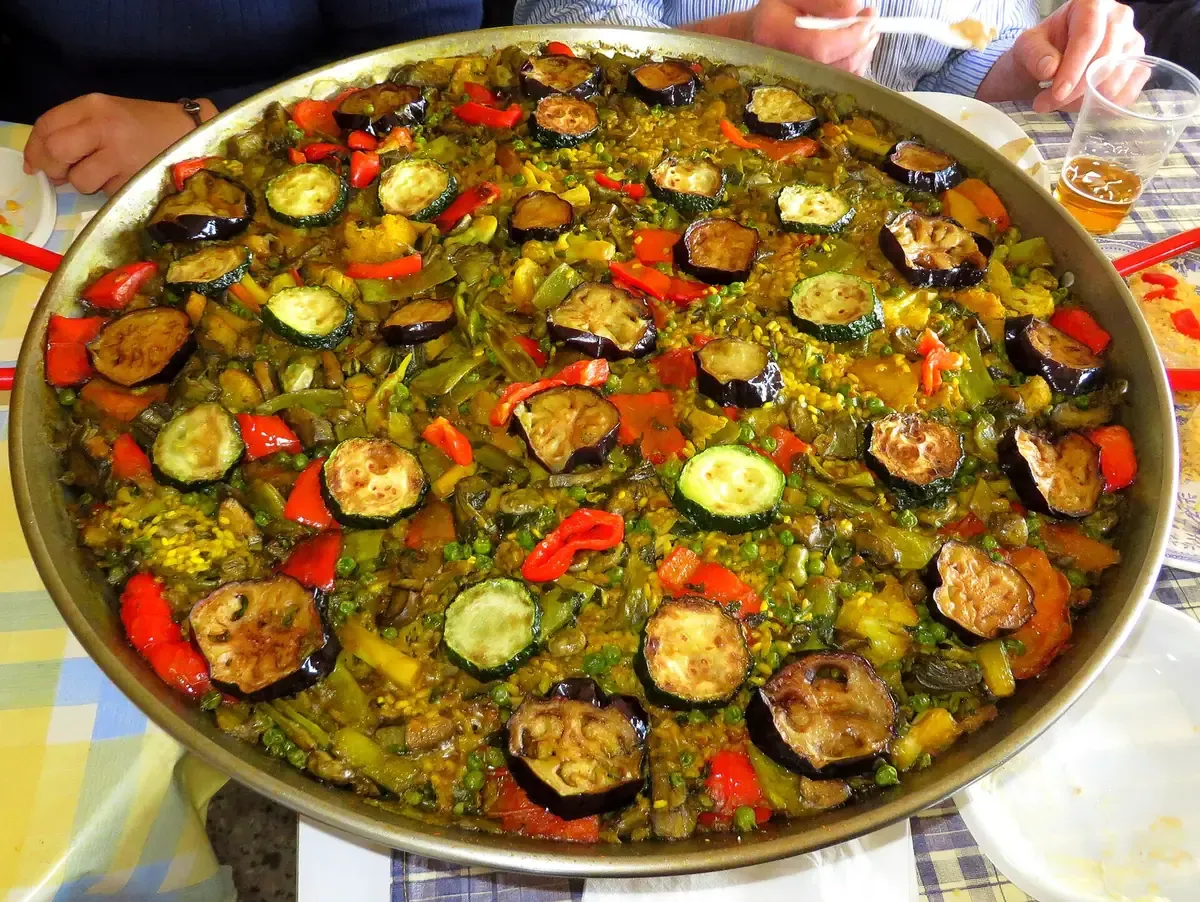
01Geographic & Texture Profile
- Primary Geographic Zone: L'Horta de València, La Safor (Oliva, Gandia), La Ribera, and the Alicante huertas.
- Liquid & Texture Profile: Seco (dry).
- Traditional Cooking Vessel & Fuel: A steel paella over orange wood or vine shoots.
02Historical & Cultural Context
Before tourism and refrigeration, the Valencian paella followed the huerta calendar. Valencia Plaza, drawing on the Safor writers Chelo Peiró and Josep Piera, contrasts two seasonal paellas:
- Paella d'estiu (summer): made "from Sant Jaume to Sant Miquel" (late July to late September) with garrofó, tavella, roget or flat green beans, good tomatoes, red pepper strips, and the prized local fesol morú. It may include chicken and rabbit, but Valencia Bonita notes that the summer version could be made entirely from huerta produce, without meat.
- Paella d'hivern (winter): "Faves, carxofes i alls tendres" (broad beans, artichokes and garlic shoots), in Piera's words. The artichoke is "the queen". Some households add a little meat from the matança (pig slaughter). Valencia Bonita calls it the paella negra, because the artichokes and habas darken the rice. It was the winter answer to the lack of fresh bajoqueta and garrofó.
A meat-free vegetable paella is therefore a traditional seasonal form, not a modern vegetarian invention. Some Valencian vegetable varieties (garrofó, tavella) are grown almost exclusively for paella.
Culinary science: without meat there is no gelatin or browned-protein fond, so flavour has to come from Maillard browning of the vegetables (pepper strips, artichoke edges), a dark tomato sofrito, and a vegetable stock simmered from trimmings. Green pepper or onion in the stock base (as in Pakus's method) adds sweetness.
03Local Town-by-Town Variations
- Oliva (La Safor): The town clearly separates a winter paella from a summer one. Some summer versions add tiny meatballs (pilotetes).
- La Safor generally: Summer means fesol morú, tavella and tomato. Winter means artichoke, habas and ajos tiernos.
- L'Horta de València: Ferraura (flat bean) is more typical here. In winter, artichokes and peas.
- Vega Baja (Alicante): See arroz de verduras de la Vega Baja, with ñora, artichoke, habas and cauliflower.
04The Master Recipe (4-Person Batch Blueprint)
Two seasonal columns: summer (huerta, no meat) and winter (paella negra).
The Flavor Base (El Fondo)
| Ingredient | Summer (paella d'estiu) | Winter (paella d'hivern) |
|---|---|---|
| Olive oil | 100 ml | 100 ml |
| Red pepper, in strips | 1 | — |
| Flat green beans / tavella / garrofó | 200 g / 100 g / 150 g | — |
| Fesol morú (if available) | 100 g | — |
| Artichokes, in eighths | — | 6 |
| Broad beans, shelled | — | 250 g |
| Ajos tiernos (garlic shoots), in pieces | — | 1 bunch |
| Ripe tomato, grated | 200 g | 150 g |
| Pimentón dulce | 3 g | 3 g |
| Vegetable stock (trimmings + green pepper + onion, 40 min) | 1.3 L | 1.3 L |
| Saffron | 0.3 g | 0.3 g |
Extraction: Brown the pepper strips (or artichokes) and set them aside for the top. Fry the beans and legumes (or habas and ajos tiernos) for 6 min. Add the pimentón (5 s), then the tomato, and cook until jammy (6 min). Add the stock and simmer for 10 min.
Assembly Ratios
| Element | Quantity |
|---|---|
| Short-grain rice | 400 g |
| Stock in the pan | ≈ 1.2 L |
Step-by-Step Cooking Blueprint
- Rice: Scatter the rice and level it. Don't stir after this.
- Fire Manipulation: High heat for 8 min, then medium-low for 8–9 min. Lay the reserved pepper strips or artichokes on top at minute 12. Finish with 1 min on high heat.
- Resting Phase: Rest 5 min.
05Authority Reference Links
- Valencia Plaza – Paella de verano, paella de invierno: ¿y si volvemos a escuchar a la tierra?
- Valencia Bonita – Paella d'estiu (paella de verano)
- Valencia Bonita – Paellas valencianas de los meses fríos (paella negra)
- Directo al Paladar – Paella de verduras (Pakus's method)
- Comunitat Valenciana – Paella valenciana (garrofó and tavella varieties)
صورة: Avicentegil · CC BY-SA 4.0 · عبر ويكيميديا كومنز