01Geographic & Texture Profile
- Primary Geographic Zone: The Alicante coast: L'Alacantí (Alicante city, El Campello), La Marina Alta & Baixa (Dénia, Xàbia, Calp, La Vila Joiosa), and the Baix Vinalopó coast (Santa Pola). It spread north to La Safor (Gandia) and south to Murcia.
- Liquid & Texture Profile: Seco (dry). A thin layer with socarrat. The fish (el peix) is served separately, "a banda" (on the side).
- Traditional Cooking Vessel & Fuel: A thin steel paella over a butane ring or wood fire. Aboard fishing boats it was cooked in an iron caldera on a small stove.
02Historical & Cultural Context
"A banda" means "apart" or "on the side". The dish was the fishermen's way of turning the unsaleable catch (morralla: rockfish, scorpionfish, weever, gurnard, small crabs) into two meals. First they boiled the fish with potato and ñora to make a stew. The fish and potatoes were eaten first, with allioli, and the concentrated broth was then used to cook the rice. Over time, especially in Alicante city restaurants, the order reversed. The rice became the star, made with a rich fumet and garnished with peeled squid or cuttlefish, and the fish disappeared or became a separate course.
The defining Alicante element is the salmorreta: a pounded paste of ñora, garlic, ripe tomato and parsley, fried in oil. It gives the rice its brick-red colour and deep, slightly bitter-sweet depth, and often replaces the onion-based sofrito used elsewhere. Culinary science: a fumet made from small bony rockfish is high in gelatin and soluble protein, so the rice comes out glossy without being sticky. Because the rice carries no large pieces of seafood, it cooks evenly in a very thin layer, which is ideal for socarrat.
03Local Town-by-Town Variations
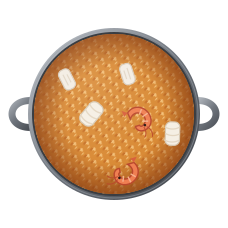
- The Alicante City / El Campello Style (modern restaurant canon): Fumet of rockfish and shrimp heads. Salmorreta base. Peeled cuttlefish (sepia) or squid diced small, and sometimes peeled red prawns. The fish is not served. Rice is eaten with allioli. Rice variety: Marisma or Bomba. Some chefs keep the heat high in the final two minutes for socarrat.
- The Marina Alta / Dénia Style: Closer to the original two-course meal. The fish and potatoes are cooked with ñora and served first, with allioli, and the rice follows in the same broth. Dénia also has a caldoso version (arròs caldós a banda), but the paella version stays dry. Saffron is more prominent than pimentón.
- The Santa Pola / Tabarca Style: This becomes the caldero, cooked in an iron pot and with more broth. Ñora is essential.
- The La Vila Joiosa Style: Cuttlefish is cooked with garlic and ajos tiernos in the base. Often less tomato, so the colour is paler and more golden.
- The Gandia / La Safor (Valencia) Style: Onion-free sofrito of garlic and tomato with pebre roig. Salmorreta is often absent, and saffron is the main colour.
04The Master Recipe (4-Person Batch Blueprint)
Variant represented: Alicante city / El Campello (fumet + salmorreta + diced cuttlefish, served with allioli).
Pan: 50–55 cm paella.
The Flavor Base (El Fondo)
A) Fumet (makes ≈ 1.5 L):
| Ingredient | Quantity |
|---|---|
| Morralla / rockfish (scorpionfish, gurnard, weever, small rascassa) | 1 kg |
| Fish heads & bones (monkfish, grouper) | 500 g |
| Shrimp heads & shells | 150 g |
| Ñora | 1 |
| Garlic | 3 cloves |
| Tomato | 1 |
| Olive oil | 40 ml |
| Water | 2.5 L |
Fry the fish heads, shrimp shells, garlic and tomato in the oil (5 min). Add the fish and water. Simmer for 35–40 min without boiling hard, then strain through a fine sieve, pressing hard. Reduce to 1.5 L.
B) Salmorreta (makes ≈ 150 g; keeps 1 week refrigerated under oil):
| Ingredient | Quantity |
|---|---|
| Ñoras, soaked in hot water 30 min, flesh scraped | 3–4 |
| Garlic | 4 cloves |
| Ripe tomato, peeled | 1 large (200 g) |
| Flat parsley | 1 small bunch |
| Olive oil | 60 ml |
| Salt | pinch |
Blend everything to a paste. Cook it gently in a small pan for 10 min until the oil separates. (Some cooks fry the garlic and ñora first; both methods are traditional.)
Assembly Ratios
| Element | Quantity |
|---|---|
| Short-grain rice (Senia, Bahía, Marisma or Bomba) | 400 g |
| Fumet (hot) | 1.2 L (Senia) – 1.4 L (Bomba) |
| Cuttlefish (sepia), cleaned & diced 1 cm | 300 g |
| Salmorreta | 2–3 tbsp (≈ 60 g) |
| Olive oil | 60 ml |
| Garlic | 2 cloves, minced |
| Saffron | 0.2 g |
| Allioli to serve | 150 g |
Step-by-Step Cooking Blueprint
- Preparation: Fumet hot on a back burner. Salmorreta made. Cuttlefish diced and dried.
- Sear: Heat the oil in the paella. Sear the cuttlefish over high heat until it releases its water and that water evaporates and the cuttlefish starts to caramelise (6–8 min). Add the garlic for 30 s.
- Toasting: Add the salmorreta and fry for 1 min. Add the rice and toast it, stirring, for 2 min until every grain is coated and translucent at the edges.
- Liquid Addition: Pour in the boiling fumet with the saffron and stir once to level. Taste for salt. Do not stir again.
- Fire Manipulation:
- Min 0–8: high heat, fast boil.
- Min 8–16: medium-low.
- Min 16–18: high heat for socarrat (listen for crackling).
- Finish/Resting Phase: Rest 3–5 min. Serve with allioli on the table. In Dénia style, serve the fish and potato from the fumet first.
05Authority Reference Links
- Wikipedia – Arròs a banda
- El Español – Los chefs coinciden: el mejor arroz a banda lleva sepia, calamar, ñora y variedad marisma
- El Español – Carles, chef: el auténtico arroz a banda se termina en los últimos minutos (socarrat)
- Dénia.net – Arroz a banda recipe (Marina Alta)
- Consum Entre Nosotros – Arroz a banda: traditional recipe
- Claudia & Julia – Arroz a banda con salmorreta
- National Geographic – Alicante's enduring obsession with arroz