01Geographic & Texture Profile
- Primary Geographic Zone: Damascus, Hama and Homs; shared with Lebanon (laban immo) and Palestine.
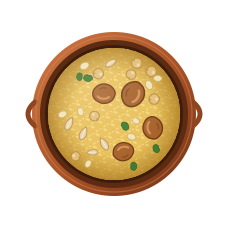
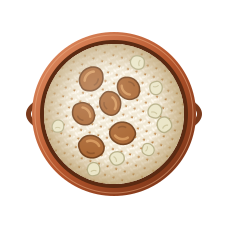
- Liquid & Texture Profile: Seco (dry): the rice itself is a dry vermicelli pilaf, served alongside a hot yogurt-and-lamb stew that is spooned over it.
- Traditional Cooking Vessel & Fuel: A pot for the meat, a heavy saucepan for the yogurt (stirred constantly), and a separate pot for the rice; stovetop.
02Historical & Cultural Context
Shakriyeh is lamb (or beef, or chicken) simmered with whole spices and then finished in hot cooked yogurt. It is one of the Levant's festive dishes, cooked for Eid al-Fitr, Eid al-Adha, the first day of Ramadan and Christmas, and most common in spring. As early as 1867 the Lebanese scholar Butrus al-Bustani defined it as "a dish of meat cooked in yogurt". The name's origin is disputed: theories link it to shukr ("thanks"), to a personal name Shakir, or to Aramaic. In Lebanon the version with small onions is called laban immo ("his mother's milk"). It is always eaten with vermicelli rice (ruz bi-sh'ariyyeh), and the white sauce and the buttery rice are inseparable on the plate.
The dish sits in a family of yogurt-cooked meats across al-Sham. Jordan's mansaf uses dried jameed instead of fresh yogurt; Palestinian names include al-safwa; some areas call it arman bi-laban.
Culinary science: yogurt curdles when boiled, because its acid-set proteins tighten and squeeze out whey. Levantine cooks stabilise it in three ways: starch (cornflour) whisked in cold, an egg (in some recipes), and constant stirring in one direction while it heats, adding the hot meat broth gradually. Once it has thickened and come to a simmer it no longer splits, and the meat can finish in it.
03Local Town-by-Town Variations
- Damascus: No mint in the yogurt, and it is often made with cow's-milk yogurt. Served with vermicelli rice and toasted pine nuts.
- Hama: Known for the quality of the "Arabic" yogurt used; finished with mint on top.
- Homs: Safflower ('usfur) added, with or without mint; some cooks add garlic.
- Lebanon — laban immo: Lamb with small whole onions in the yogurt; garlic and dried mint fried in butter on top.
- Chicken versions: Common in modern home cooking (cardamom, bay, cinnamon in the broth), served with vermicelli rice.
04The Master Recipe (4-Person Batch Blueprint)
Variant represented: Damascus (no mint in the yogurt), with the Hama and Homs finishes noted.
The Flavor Base (El Fondo)
| Ingredient | Quantity |
|---|---|
| Lamb shoulder (or beef), 3 cm cubes | 800 g |
| Water | 1.5 L |
| Cinnamon stick, 3 cloves, 2 bay leaves, 4 cardamom pods | 1 set |
| Pearl onions (small whole), peeled | 12 |
| Plain full-fat yogurt (cow's milk in Damascus) | 1 kg |
| Cornflour, dissolved in 60 ml cold water | 2 tbsp |
| Egg (optional stabiliser) | 1 |
| Salt | to taste |
| [Homs] Safflower | 1 pinch |
| [Hama] Dried mint, to finish | 1 tsp |
Assembly Ratios
| Element | Quantity |
|---|---|
| Rice (Egyptian short-grain or basmati) | 300 g |
| Fine vermicelli (sh'ariyyeh) | 60 g |
| Ghee or butter | 40 g |
| Water for the rice | ≈ 1.5× the rice volume (short-grain) |
| Yogurt sauce : meat broth | ≈ 1 kg : 250 ml |
Step-by-Step Cooking Blueprint
- Meat: Cover the meat with the water and whole spices, bring to a boil, skim, and simmer 75 min (45 min in a pressure cooker). Strain and keep the broth.
- Onions: Fry the pearl onions in a little oil until golden, then simmer them in a ladle of broth for 10 min.
- Yogurt: Whisk the cold yogurt with salt, the cornflour slurry (and the egg, if using). Heat it over medium heat, stirring constantly in one direction, until it thickens and simmers (≈ 10–12 min). Add ≈ 250 ml of hot broth gradually.
- Combine: Add the meat and onions and simmer gently for 10 min. [Homs: add the safflower.]
- Vermicelli rice: Brown the vermicelli in ghee until deep golden. Add the drained rice and stir for 1 min. Add hot water and salt, cover, and cook on low 15–18 min. Rest 10 min and fluff.
- Serve: Rice on the plate with the shakriyeh ladled over or beside it, topped with toasted pine nuts. [Hama: sprinkle dried mint.]