01Geographic & Texture Profile
- Primary Geographic Zone: The Murcian interior and huerta: Noroeste (Calasparra, Caravaca, Moratalla, Cehegín), Altiplano (Jumilla, Yecla), and the Huerta de Murcia.
- Liquid & Texture Profile: Seco (dry). A thin layer, cooked over wood ("a la lumbre").
- Traditional Cooking Vessel & Fuel: A steel paella over vine shoots (sarmiento) or pine. Some inland households use a clay cazuela.
02Historical & Cultural Context
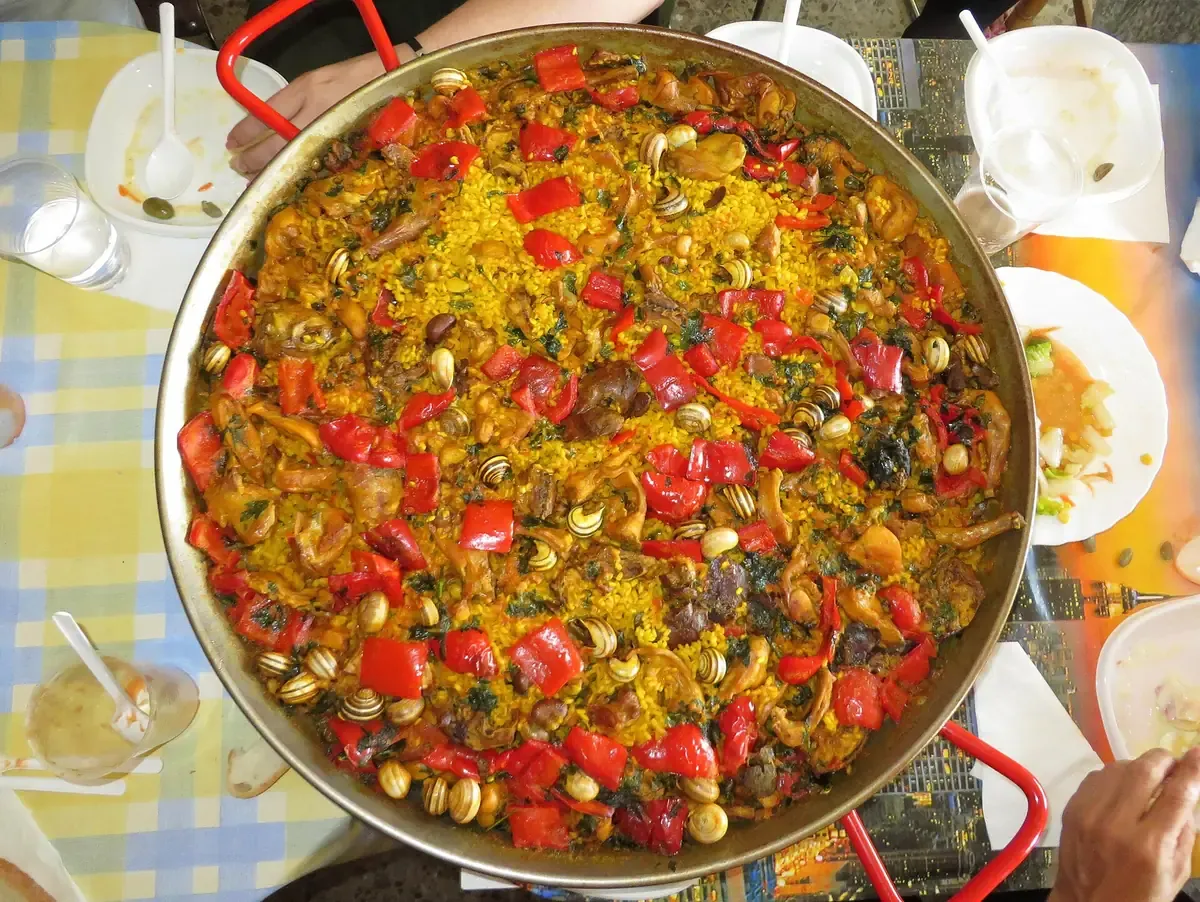
Murcian sources describe rice cooked "a la lumbre" (over an open wood fire) as one of the pillars of the region's cooking, and rabbit with snails as the classic version. It is the Murcian side of the same mountain rice tradition as the Alicante interior's (recipe_arroz_conejo_y_caracoles.md, the Pinoso and Vega Baja schools). The main difference is the rice: Murcian cooks insist on D.O. Arroz de Calasparra, grown on the terraces of the Segura and Mundo rivers. According to the D.O. documentation, the area's most classic dish is rabbit and snail rice made with local rice and cooked over a wood fire. The snails are serranas, small mountain snails, which cooks clean and "asustan" ("startle") by starting them in cold water before bringing it to a boil.
Culinary science: Calasparra grows rice at altitude in cold river water, so the grain ripens slowly. That makes it harder and lower in moisture, and it can absorb about three times its volume without bursting. The dish tolerates a little more broth and still stays loose. Red pepper strips fried in the oil carry their sweetness into the fat.
03Local Town-by-Town Variations
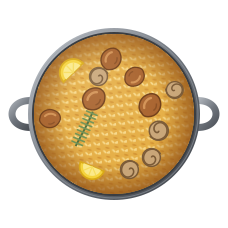
- Calasparra / Noroeste: Rabbit + serranas + ripe tomato + red pepper + garlic + saffron + olive oil, with Calasparra rice. Wood fire.
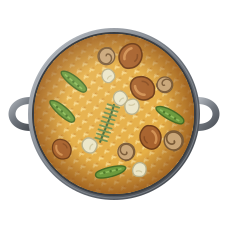
- Huerta de Murcia: Adds seasonal huerta vegetables (artichoke, bajocas, which are green beans) and sometimes chicken. Lemon on the side is common across Murcia.
- Altiplano (Jumilla / Yecla): Vine-shoot fire from the Monastrell vineyards. Similar to Pinoso across the border. ⚠️ No dedicated local source found; this is reconstructed from the shared Monastrell-country practice.
- How it differs from the Alicante school: Murcian versions favour red pepper strips and Calasparra rice. Pinoso favours thyme and ñora, and the Vega Baja serves it with lemon and a ñora picada (pounded paste).
04The Master Recipe (4-Person Batch Blueprint)
Variant represented: Calasparra / Noroeste (Directo al Paladar and Spain.info proportions blended).
The Flavor Base (El Fondo)
| Ingredient | Quantity |
|---|---|
| Olive oil | 120 ml |
| Rabbit, in small pieces | 1 (≈ 1.2–1.5 kg) |
| Red pepper, wide strips | ½ |
| Garlic | 4 cloves |
| Ripe tomato, grated | 200 g |
| Serranas (mountain snails), purged and "startled" | 20–24 |
| Pimentón dulce | 3 g |
| Saffron | 0.3 g |
| Rosemary | 1 sprig |
| Water | 1.4 L |
Extraction: Fry the pepper strips and set them aside. Brown the rabbit with salt (20 min). Add the garlic, pimentón (5 s) and tomato (5 min). Add the water, snails and saffron and simmer 25 min, reducing to about 1.1 L. Return the pepper strips. Add the rosemary for the last 3 min, then remove it.
Assembly Ratios
| Element | Quantity |
|---|---|
| Calasparra rice (bomba or balilla × sollana) | 320–350 g |
| Broth | ≈ 1.05–1.1 L |
| Lemon | 1 |
Step-by-Step Cooking Blueprint
- Snails: Put them in cold water and bring slowly to a boil so they come out of their shells, then drain.
- Fondo: As above.
- Rice: Scatter in an even layer. Don't stir after this point.
- Fire: High for 8 min → embers for 8–9 min (Calasparra rice takes about 18 min) → a short flare at the end for the socarrat.
- Finish: Rest 5 min. Serve with lemon wedges.
05Authority Reference Links
- Directo al Paladar – Arroz con conejo y serranas (tradición murciana)
- Spain.info – Arroz con conejo y caracoles
- Gastronosfera – Nos ponemos muy melosos con los arroces de Murcia
- Turismo Región de Murcia – Un paseo por la huerta (Federación de Peñas Huertanas recipe book, PDF)
- Wikipedia – Calasparra rice
صورة: Avicentegil · CC BY-SA 4.0 · عبر ويكيميديا كومنز